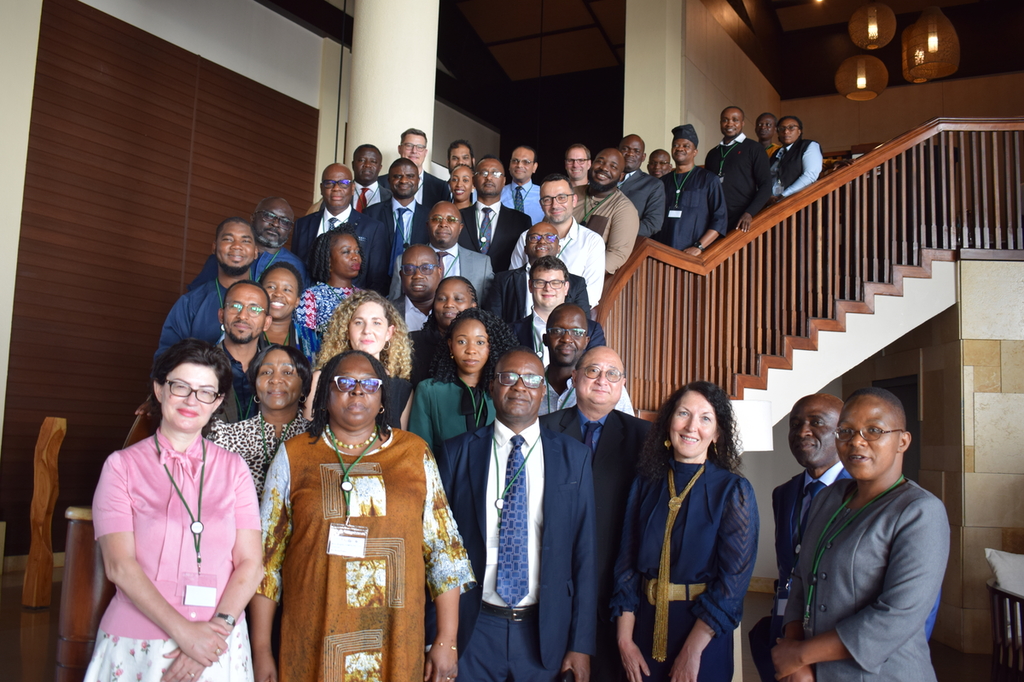
Health is one of the largest and most politically sensitive areas of public spending. Yet ministries of finance and health often talk past each other. One presentation at the first meeting of CABRI's Network of African Health and Finance Officials, held in Mauritius in August 2026, captured the caricatures well. The finance ministry calls the health budget a "black hole": no matter how much is allocated, the sector still feels underfunded. The health ministry says the finance ministry "only cares about money – not service delivery."
With growing domestic fiscal constraints and external funding for health falling sharply, the gap between finance and health has become harder to afford. On the last two days of the three-day meeting, officials from 16 African countries explored what effective coordination looks like and what it takes to build it.
Defining coordination and its impediments
Asked what effective coordination would mean to them, participants went well beyond meetings. They described working "as partners rather than funder and recipient"; sharing an understanding of the problems each ministry must solve; being able to "ask critical questions of each other without getting defensive"; and working together continuously, not only during the annual budget formulation process.
Participants named their biggest obstacles as competing priorities, information asymmetries and too little informal engagement. These echo OECD findings presented at the meeting: finance ministries lack capacity to assess health proposals, information is not shared, relationships between officials are thin, and there are few incentives to cooperate. In aid-dependent countries, a legacy of extra-budgetary workarounds has also pulled health ministries' attention towards donors rather than the finance ministry.
Formal structures and informal trust
No single arrangement fits every country, but the Network heard what works. Rwanda has built coordination into its national planning and budgeting calendar, through a finance minister-chaired development partners group, 19 sector working groups, joint sector reviews, ministerial consultations and parliamentary hearings. Informal engagement starts months before the formal process, so by budget hearings the finance ministry already understands the health ministry's priorities. Zambia introduced routine joint planning and budget-execution review meetings in June 2025. Health priorities are now discussed before budget ceilings are set, which officials say has improved budget realism and the predictability of releases.
Budgeting tools can make these relationships concrete. The OECD highlighted four: engaging the health ministry at every stage of the budget cycle; medium-term, top-down budgeting; programme and performance budgeting; and spending reviews, which counter the bias towards new spending by examining what existing budgets achieve. OECD members also use joint bodies, such as Ireland's Health Budget Oversight Group and the Netherlands' Sustainable Healthcare Spending Taskforce.
Timing matters as much as structure. Malawi called for the finance ministry to be involved in major health policies before they are finalised, so fiscal implications shape policy design rather than finance being asked to fund policies already decided. Others proposed staff secondments, joint expenditure and efficiency reviews, and a permanent framework for dialogue. On who should lead, the answer was pragmatic: it matters less which ministry leads than that the two work directly together.
Injecting a health policy focus into the ministry of finance
A central question was how finance ministries can move beyond checking that health budgets stay within ceilings to engaging with what the money achieves.
South Africa's National Treasury has a health unit that includes a public health specialist, health economists and public finance generalists. The expertise was not built by grand design, but through individual recruitment and training decisions over time. It changes the questions the Treasury asks. Instead of only "did you underspend?" it asks how underspending affected services, what health problem is being solved, and whether an intervention is cost-effective. This expertise has helped the Treasury replace blunt, across-the-board cuts with targeted savings drawn from programme-level analysis. Officials were candid about the risks: turf wars with the health ministry, perceptions of advocacy within the Treasury, and less pressure on the health ministry to build its own capacity.
Mauritius described its shift "from budget stewardship to health policy partnership". A dedicated health support team in the finance ministry assesses health policies and costs new initiatives, and maintains year-round dialogue with the health ministry. A policy dialogue meeting between the two ministers settles priorities before the budget is finalised. In Mauritius' words, the finance ministry "stopped asking 'How much does the hospital need?' and started asking 'What health gains are we buying with this spend?'" Nigeria's budget office described a similar move away from a "Dragon's Den" model of pitching for funds, towards genuine co-engagement that balances "more money for health" with "more health for the money".
First steps for any finance ministry include recruiting even one health specialist, meeting regularly outside the formal process, and joining health facility visits. Ethiopia signalled its intention to establish a health-focused unit in its Finance Ministry.
The health ministry's finance function as a bridge
The other side of the bridge is the health ministry's own budget and finance function — in effect "a finance ministry within the line ministry." It coordinates budget preparation, execution and reporting, and is the finance ministry's main point of contact. South Africa's National Department of Health’s finance office sees itself as the intermediary between health entities, provinces and the Treasury.
From the finance ministry's side, a strong finance function submits credible requests that set out beneficiaries, unit costs, objectives, cost-effectiveness and how gaps will be filled. It treats the Treasury as a partner, and acts as a gatekeeper within its own ministry, asking the questions the Treasury will ask before requests go out. Côte d'Ivoire's health ministry engages its finance counterparts before submitting any numbers, and is working to make its finance function strategic rather than administrative. International experience points the same way. The Netherlands, the United States and the United Kingdom have all raised the head of finance in line ministries to a role closer to a chief financial officer, moving finance "from a backroom function to a boardroom function."
The two reforms go hand in hand. Health expertise in the finance ministry works best when matched by a strong finance function in the health ministry, not as a substitute for it.
Where the Network comes in
Neither ministry can plan, prepare or execute the health budget on its own. The Network will continue to support better coordination within and across countries, encouraging ministries of finance to develop stronger health policy expertise and building financial management capacity in ministries of health.